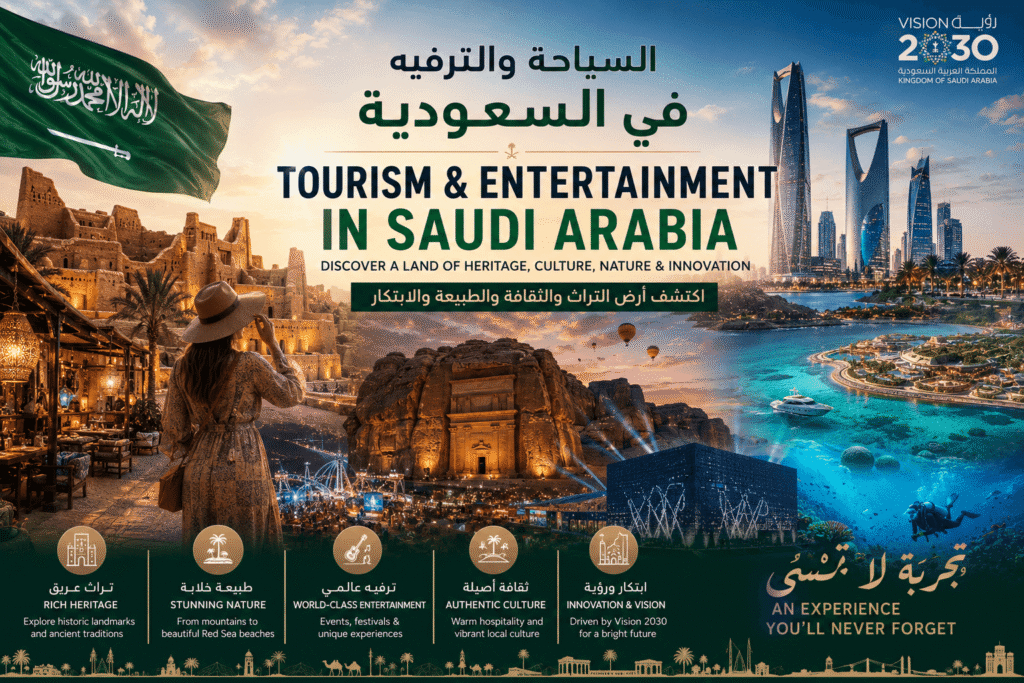
In 2026, Saudi Arabia is no longer just a religious destination for Hajj and Umrah pilgrims. It has transformed into a comprehensive tourism and entertainment empire that attracts millions of visitors from every corner of the globe. This radical transformation did not happen by chance — it is the fruit of an ambitious strategic vision known as Vision 2030, launched by Crown Prince Mohammed bin Salman in 2016 with the goal of diversifying the Saudi economy away from its dependence on oil.
Vision 2030 and Tourism: An Unprecedented Quantum Leap
Vision 2030 placed the tourism sector at the heart of economic diversification plans, setting an ambitious target of attracting 150 million tourist visits annually by 2030. The Saudi government established the Saudi Tourism Authority as the primary driver of this sector, allocating massive budgets and launching mega-projects stretching from north to south and east to west across the Kingdom. Sweeping reforms to the visa system and progressive social openness have thrown the doors wide open to millions of tourists who had long aspired to discover this land rich in history, culture, and natural wonders.
Top Tourist Destinations in Saudi Arabia
1. AlUla: The Rose-Stone City and Its Historical Secrets
AlUla is one of the most exciting tourist destinations in the world, attracting widespread international attention particularly after hosting world-class entertainment festivals and unique artistic performances. AlUla encompasses the ancient city of Hegra (Mada’in Salih), the first UNESCO World Heritage Site in Saudi Arabia. Stretching across this rose-colored desert are thousands of years of Nabataean, Dedanite, Minaean, and Assyrian history, forming an unparalleled open-air museum that leaves visitors breathless.
2. NEOM: The City of the Future Redefining Life Itself
No discussion of Saudi tourism is complete without mentioning NEOM, the giga-project embodying the Kingdom’s ambition to build the city of the future. NEOM encompasses multiple sub-projects including “The Line” — a car-free linear city stretching 170 kilometers — and “Trojena,” a mountain destination for winter sports that will host the 2029 Asian Winter Games. It also includes “Sindalah,” a luxury entertainment island in the Gulf of Aqaba. Together, these projects redefine sustainable tourism and have garnered unprecedented global interest.
3. Diriyah: The Capital of the First Saudi State
Located just miles from Riyadh, Diriyah witnessed the founding of the first Saudi state in the eighteenth century. The historic Al-Bujairi Quarter has been developed and rehabilitated to become a comprehensive cultural and entertainment destination, combining fine-dining restaurants, cafés, museums, art galleries, and retail outlets — all designed in the distinctive traditional Najdi architectural style. The project is considered one of the most successful heritage tourism projects in the Arab world.
4. The Red Sea: A Paradise of Diving and Coral Reefs
The Red Sea Project is one of the world’s most ambitious luxury tourism developments, spanning over 28,000 square kilometers along the northwestern Red Sea coast. The project encompasses more than 90 pristine islands, rare coral reefs, and diverse natural ecosystems, targeting tourists seeking luxury experiences in harmony with nature. The first luxury hotels began opening in 2023, and development continues at full pace to welcome visitors from around the world.
5. Abha and Asir: The Green Mountain Paradise of the South
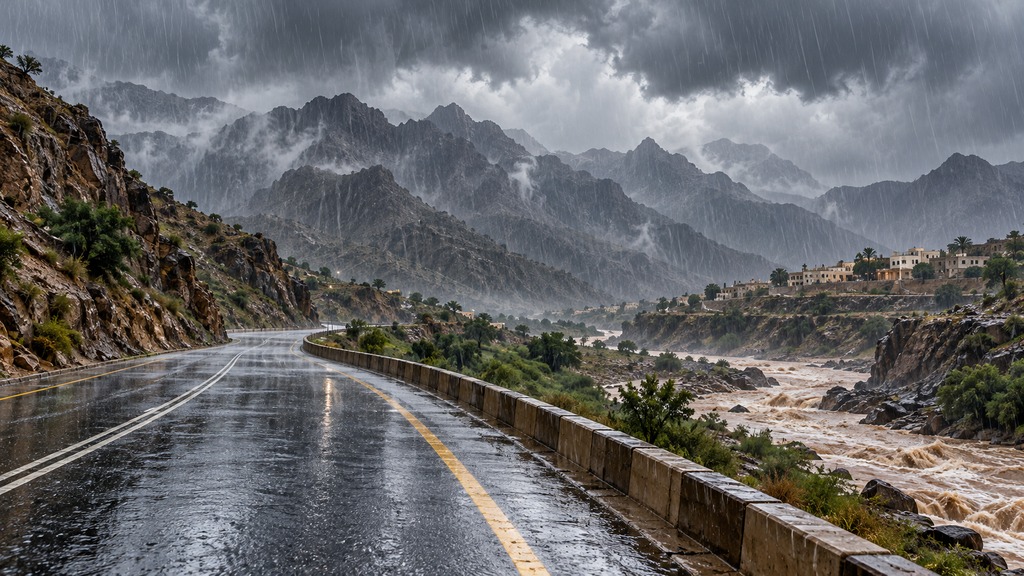
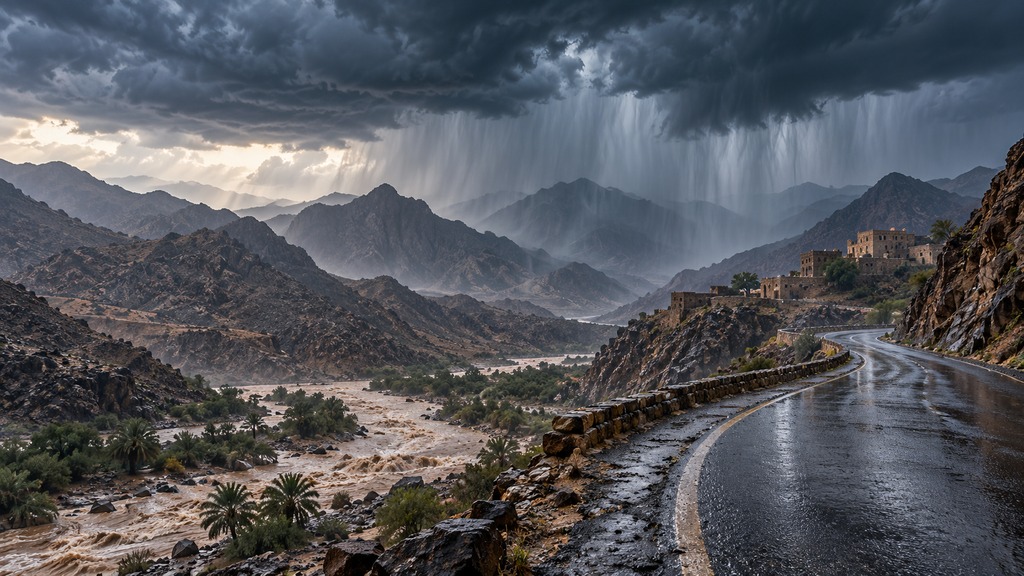
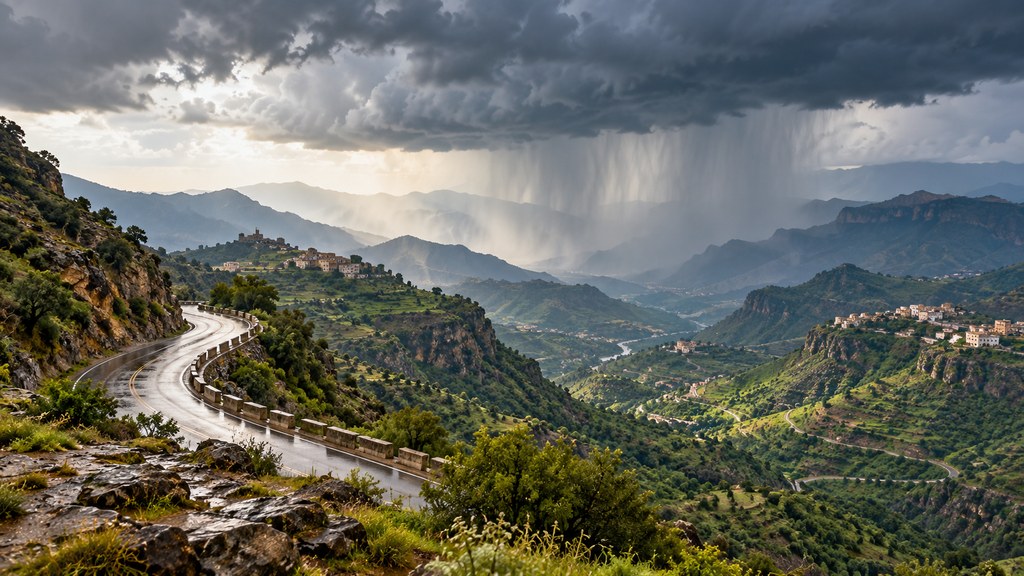
The Asir region and its capital Abha stand as testament to Saudi Arabia’s breathtaking geographical diversity. Distinguished by towering mountains permanently shrouded in mist and clouds, seasonal rainfall rare in the Arabian Peninsula, and unique cultural traditions, this region has become a favorite destination for domestic and Gulf tourists alike. The region hosts an annual tourism festival considered among the largest in the Kingdom.
Saudi Entertainment: From Zero to the Summit in Just a Few Years
Perhaps the most eye-catching transformation on the global stage is the revolution in Saudi Arabia’s entertainment sector. After decades of near-total absence of public entertainment, the General Entertainment Authority was established in 2016, marking the beginning of an entirely new chapter in the Kingdom’s social and economic history.
Movie Theaters: The Big Screen Returns After 35 Years
In April 2018, Saudi Arabia lifted its thirty-five-year ban on cinemas. Today, the Kingdom boasts more than 650 cinema screens distributed across major cities and provinces, with the government targeting 2,600 screens by 2030. Global cinema giants including AMC, VOX, and Empire have entered this promising market, and Saudi citizens now enjoy the latest international films in world-class theaters — a luxury unimaginable just a decade ago.
Sports: Building Grand Dreams on an International Stage
The Kingdom has not merely hosted traditional sporting events — it has gone far beyond that. Saudi Arabia has hosted major world championship boxing matches, European Tour golf events, Formula 1 races in Riyadh, tennis tournaments, and WWE wrestling shows. The crown jewel is the Kingdom’s successful bid to host the FIFA World Cup 2034, the largest sporting event in human history. Adding to this is the Saudi Pro League (Roshn League), which attracted global stars such as Cristiano Ronaldo, Karim Benzema, and Neymar, transforming it into a magnet for fans from around the world.
Mega Festivals and Year-Round Events
Saudi Arabia now hosts an expansive spectrum of festivals and events throughout the year. Leading the way is Riyadh Season, one of the world’s most colossal entertainment festivals, spanning several months and gathering under one roof performances by international and local artists, circus shows, gaming experiences, fine-dining restaurants, and a diverse range of entertainment experiences. The festivals of Jeddah Season, Diriyah Season, and AlUla Season similarly captivate a broad local, Arab, and international audience, cementing the Kingdom’s position as a year-round entertainment hub.
Tourism Infrastructure: Investments Worth Billions
Saudi planners understand that tourist attraction relies not only on landmarks and events but also requires comprehensive, high-quality infrastructure. The Kingdom is therefore channeling enormous investments into aviation, hospitality, transportation, and digital tourism systems.
On the aviation front, Riyadh Air has launched as a new national carrier aimed at doubling the Kingdom’s air capacity, while Saudi Airlines (Saudia) is expanding its fleet and network to cover more than 100 destinations worldwide. King Abdulaziz International Airport in Jeddah, Prince Mohammed bin Abdulaziz Airport in Madinah, and Prince Sultan bin Abdulaziz International Airport in Tabuk are all undergoing major expansions to accommodate the growing numbers of travelers.
On the hospitality front, major international hotel chains including Marriott, Hilton, Accor, Four Seasons, Park Hyatt, and Ritz-Carlton have announced ambitious expansion plans in the Kingdom, with a target of providing more than 320,000 hotel rooms by 2030.
Tourist Visa: The Gateway to Openness
In a historic step in 2019, Saudi Arabia launched an electronic tourist visa (e-Visa), opening its doors to citizens of 49 countries around the world who can now obtain a tourist visa conveniently and easily through the official visit platform. This landmark move has significantly boosted tourist arrivals and shattered the outdated stereotype that painted the Kingdom as a closed destination inhospitable to leisure tourism.
Religious Tourism: Sustained Leadership and Development
Any discussion of Saudi Arabian tourism would be incomplete without acknowledging the Kingdom’s global leadership in religious tourism. Saudi Arabia attracts more than 13 million pilgrims annually for Hajj and over 20 million Umrah performers, making it the world’s undisputed premier religious destination. The Kingdom continuously works to enhance the Hajj and Umrah experience through expansion projects at the Grand Mosque and the Prophet’s Mosque, while deploying cutting-edge artificial intelligence and crowd management technologies to ensure the safety and comfort of pilgrims.
Challenges and Future Horizons
Despite these enormous achievements, Saudi tourism faces a range of challenges that the Kingdom is addressing with seriousness and resolve. Foremost among them is developing trained human capital in the hospitality and tourism sector — the Kingdom is working to qualify thousands of Saudi men and women to lead this vital industry. Preserving the environment and natural resources amid rapid tourist expansion is also a pivotal challenge, which has led the Kingdom to adopt sustainable tourism standards in its major projects such as the Red Sea Project and NEOM.
Looking at the trajectory of rapid growth and the scale of massive investments, it is no exaggeration to say that Saudi Arabia is marching confidently toward securing a distinguished place on the global tourism map — from a country once avoided by tourists to a destination now competing with the world’s top venues for hosting major events and delivering unique experiences. This is the transformation being lived today in the Kingdom, and it is still in its early chapters.
Conclusion: A Bright Future for a Promising Sector
The Saudi experience proves that political will and strategic vision are capable of driving radical transformations in record time. What began as a dream inscribed in the Vision 2030 document has today become a tangible reality witnessed by the entire world. The tourism and entertainment sector in Saudi Arabia is no longer an emerging industry — it is well on its way to becoming a cornerstone of the national economy and a window for civilizational dialogue between the Kingdom and the peoples of the world. For more official tourism information, visit Visit Saudi’s official website.