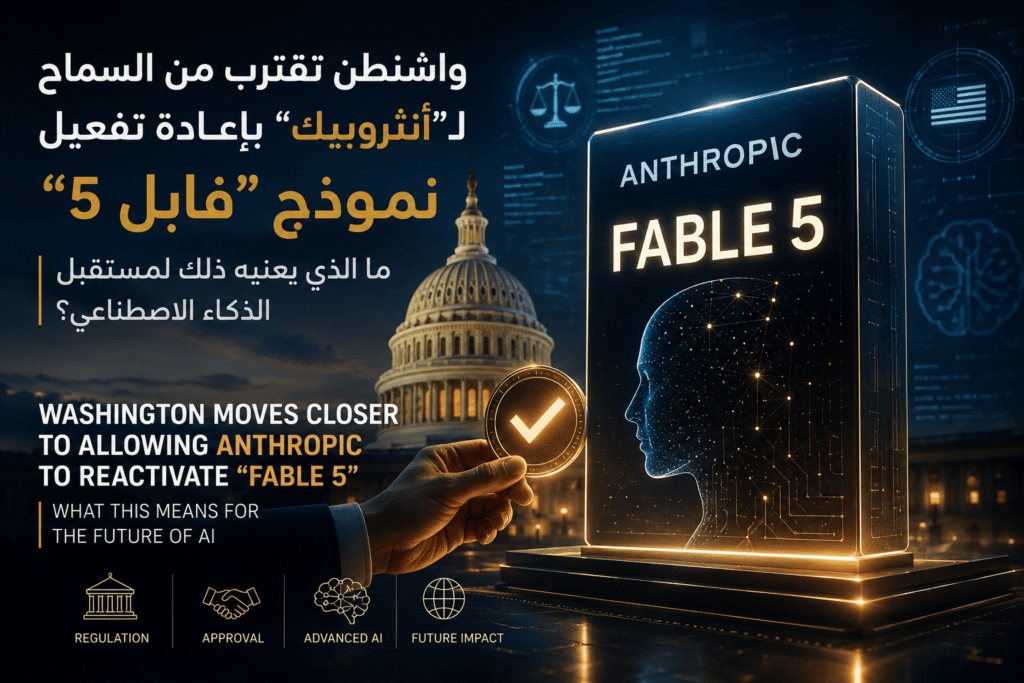
In what could be a watershed moment for the artificial intelligence industry, reports are emerging that the White House and key regulatory bodies are moving closer to granting Anthropic approval to reactivate and publicly deploy its most advanced AI model, widely referred to as “Fable 5”. This development comes amid intense debates in Congress and the executive branch about the future of AI regulation in the United States, set against a backdrop of fierce geopolitical competition with China and other global tech powers. The decision, still pending finalization, could fundamentally reshape the competitive landscape of artificial general intelligence.
Who Is Anthropic and Why Does It Matter?
Anthropic is an American AI safety company founded in 2021 by Dario Amodei and Daniela Amodei, alongside several prominent researchers who left OpenAI to pursue their vision of safer, more interpretable AI systems. Headquartered in San Francisco, the company has built its reputation on a foundational commitment to building AI that is safe, reliable, and explainable. Their flagship product line, the Claude series of models, has emerged as a formidable competitor to OpenAI’s GPT series and Google’s Gemini models, earning praise from researchers and enterprise customers alike for its nuanced reasoning and safety-conscious design. For more information about the company’s mission and research, visit Anthropic’s official website.
The company has attracted staggering investment, including a landmark $7 billion commitment from Amazon, pushing its total valuation to over $18 billion. What distinguishes Anthropic from many of its competitors is its signature approach known as Constitutional AI (CAI) — a methodology designed to instill ethical guidelines and safety constraints directly into AI models during training, rather than relying solely on post-hoc filtering. This approach has been widely discussed in academic circles and covered by outlets such as MIT Technology Review.
What Is “Fable 5” and What Makes It Exceptional?
Industry insiders and tech publications describe “Fable 5” as Anthropic’s fifth-generation frontier model — a qualitative leap beyond anything the company has previously released. According to sources familiar with the development process and reports circulating in specialized technology media, this model exhibits several extraordinary capabilities:
- Advanced Reasoning and Logic: The model reportedly outperforms all existing benchmarks in mathematical problem-solving and multi-step logical deduction, approaching human-level performance on standardized reasoning tests.
- Extended Context Window: With the ability to process millions of tokens in a single context, the model can analyze entire legal contracts, medical records, or research corpora in one pass.
- Multimodal Intelligence: Seamless integration of text, images, structured data, and potentially audio and video inputs, enabling far richer human-AI interaction.
- Creative Sophistication: The model generates creative content — from technical documentation to literary fiction — at a quality level that rivals professional human writers in controlled evaluations.
- Unprecedented Safety Architecture: Multiple layers of protection against misuse, including real-time harm detection and context-aware refusal mechanisms that represent a significant advancement over previous safety approaches.
According to reporting by Reuters Technology and TechCrunch, the model has undergone extensive internal red-teaming exercises and third-party safety evaluations, with Anthropic claiming that it meets or exceeds the safety thresholds set by current regulatory frameworks.
Why Does a Private Company Need Government Approval?
The question naturally arises: why would a private tech company require government approval to release its own product? The answer lies in the unprecedented regulatory environment that has emerged around what experts call “frontier AI models” — systems so powerful that they are deemed to carry potential national security implications.
In the wake of executive orders focused on AI governance, major technology companies developing models above certain computational thresholds are now required to submit comprehensive safety evaluations to designated government bodies before public deployment. These requirements fall under what has been termed a “Responsible Frontier AI Policy” — a framework that the U.S. Congress has been working to codify into formal legislation. For the most current information on U.S. government AI policy, the official U.S. AI government portal and the National Institute of Standards and Technology (NIST) AI Resource Center provide authoritative guidance.
Additionally, the U.S. Department of Commerce has been increasingly involved in shaping export controls around advanced AI models, adding another layer of regulatory complexity that companies like Anthropic must navigate before bringing their most powerful systems to market.
The Political Landscape: A Divided Washington
Washington’s approach to advanced AI is anything but monolithic. The debate reveals deep fault lines that cut across traditional partisan boundaries, creating unusual alliances and unexpected opposition:
Proponents of rapid deployment argue that restricting America’s leading AI companies hands China a strategic gift it would otherwise have to work years to earn. A widely cited report from the Brookings Institution underscores that U.S. technological leadership in AI is not merely a commercial advantage but a national security imperative. This camp includes major technology companies, venture capital firms, and a significant number of legislators from both parties who view AI as the defining economic engine of the coming decades.
Advocates for stringent regulation before deployment include a coalition of researchers, ethicists, civil liberties organizations, and some tech insiders who warn that releasing extremely powerful AI models without adequate safeguards could pose existential risks. They point to research from institutions like the RAND Corporation that highlights potential misuse scenarios ranging from sophisticated disinformation campaigns to assistance with the development of dangerous biological agents.
Economic Stakes: Trillions on the Line
The economic context provides crucial background to understanding the urgency driving Washington’s deliberations. According to projections published by McKinsey Global Institute, generative AI could add between $2.6 trillion and $4.4 trillion to the global economy annually across use cases in customer operations, marketing, software engineering, research, and more. The company that leads this technological wave will command an extraordinary degree of economic and geopolitical influence.
Domestically, the AI industry has already demonstrated its economic significance. U.S. Bureau of Labor Statistics data indicates that technology sectors anchored by AI development have been among the most resilient in the American labor market, creating hundreds of thousands of direct and indirect jobs even as other sectors experienced contraction. The deployment of more advanced models is expected to accelerate this trend, creating new categories of work while also displacing certain routine cognitive tasks.
The Geopolitical Dimension: The U.S.-China AI Race
Perhaps no factor weighs more heavily in Washington’s calculations than the intensifying technological rivalry with China. Beijing has made artificial intelligence a centerpiece of its national development strategy, with Chinese companies like Baidu, Alibaba, Huawei, and a growing constellation of well-funded startups racing to close the gap with American counterparts. China’s official strategy documents explicitly target AI leadership by 2030.
Analysts at the Center for Strategic and International Studies (CSIS) have consistently argued that regulatory delays in the United States translate directly into competitive advantages for Chinese AI developers. Every month that a frontier American model sits in regulatory limbo is a month that Chinese developers use to advance their own capabilities, potentially narrowing or even eliminating America’s current lead in certain domains.
This geopolitical reality appears to be influencing the White House’s disposition toward approving Anthropic’s deployment request, though the administration is simultaneously trying to ensure that adequate safety guardrails are in place before green-lighting what could be the most capable publicly available AI system ever released.
Anticipated Conditions for Approval
Based on reporting by The Verge and Wired, sources close to the negotiations suggest that any government approval for Fable 5’s deployment will likely come with a substantial set of binding conditions:
- Comprehensive Safety Evaluation Report: Anthropic must submit a detailed technical assessment demonstrating the model cannot be weaponized to assist in the development of biological, chemical, radiological, or nuclear weapons.
- Continuous Monitoring Mechanisms: Government-designated agencies must be granted access to ongoing behavioral monitoring of the deployed system, with clearly defined escalation protocols for safety incidents.
- Access Tiering: Restrictions on which entities — particularly foreign governments and their proxies — can access the model’s full capabilities, potentially through a licensing or credentialing system.
- Training Data Transparency: Disclosure of key details about training datasets and methodologies to regulatory bodies, without necessarily requiring full public disclosure.
- Mandatory Incident Reporting: A legally binding commitment to immediately notify appropriate government agencies of any discovered misuse, safety failures, or unexpected emergent behaviors.
Global Implications: What This Means Beyond America’s Borders
The deployment of a model of this caliber will send shockwaves far beyond Silicon Valley and Washington, D.C. In the European Union, where the landmark EU AI Act has set a global precedent for AI regulation, policymakers will be watching the American approach closely. The transatlantic divergence or convergence on AI governance will have profound implications for how companies develop and deploy AI systems globally.
In the Middle East and North Africa region, particularly in Saudi Arabia where Vision 2030 has placed digital transformation and knowledge economy development at the forefront of national strategy, the implications are equally significant. Advanced AI models capable of nuanced Arabic language processing, legal analysis, medical diagnostics, and financial modeling could serve as powerful accelerants for the Kingdom’s ambitious diversification agenda. Saudi Arabia’s commitment to AI leadership is visible through initiatives like the Saudi Data and Artificial Intelligence Authority (SDAIA), which has been actively cultivating a domestic AI ecosystem.
Japan, South Korea, the United Kingdom, and other close American allies will also be watching carefully, as the U.S. regulatory framework for frontier AI is likely to become the de facto global standard that other democratic nations align with or respond to in their own policy development.
What This Means for Businesses and Developers
For businesses and developers considering how to position themselves in an AI-transformed world, the potential approval of Fable 5 carries immediate practical implications:
Enterprise customers who have been running pilots with earlier Claude models will likely see dramatic capability improvements that could unlock entirely new use cases in legal research, drug discovery, code generation, and customer service. The model’s extended context window alone could transform industries that deal with large volumes of complex documentation.
For developers building applications on top of AI APIs, the availability of a more capable foundation model means rethinking what’s possible. Products that required complex multi-step prompting chains may become achievable through single, well-constructed queries. This architectural simplification could dramatically lower the barriers to entry for AI-powered application development.
Conclusion: A Pivotal Moment in the History of Intelligence
What is unfolding in Washington right now is not simply a regulatory process — it is a civilizational decision point. The question of how to govern frontier AI systems that rival or surpass human cognitive capabilities in specific domains is among the most consequential policy questions of our era. The decision that the U.S. administration ultimately makes regarding Anthropic’s Fable 5 will echo through the annals of technological history.
For readers in the Arab world and beyond, these developments are not abstract geopolitical theater — they are the opening moves in a technological transformation that will reshape economies, labor markets, healthcare systems, educational institutions, and the very nature of human creativity and work. Staying informed about these developments is not optional for business leaders, policymakers, and professionals who aspire to thrive in the coming decades.
The age of truly powerful artificial intelligence is arriving. The question is not whether it will transform the world, but who will shape the terms of that transformation — and whether those terms will be ones that serve humanity’s broadest interests.
For ongoing coverage of AI developments, follow authoritative sources including MIT Technology Review’s AI section, The Verge AI, ArXiv AI research preprints, and Reuters Technology coverage.
📚 Sources & References Table
The following table lists all authoritative sources referenced in this article, with verified links:
| Source | Organization | Topic | Link |
|---|---|---|---|
| Anthropic Official Website | Anthropic | Company information & Claude models | anthropic.com |
| TechCrunch Technology | TechCrunch | AI news & government approval conditions | techcrunch.com |
| The Verge – AI Section | The Verge | Comprehensive AI coverage & Fable 5 conditions | theverge.com/ai |
| Reuters Technology | Reuters | Fable 5 safety evaluations & red-teaming reports | reuters.com/technology |
| Wired Magazine | Condé Nast | Anthropic model reporting | wired.com/ai |
| Brookings Institution | Brookings | U.S. AI strategic leadership & national security | brookings.edu/ai |
| RAND Corporation | RAND | AI misuse risks & biosecurity concerns | rand.org/ai |
| McKinsey Global Institute | McKinsey | Generative AI economic impact ($2.6–4.4 trillion) | mckinsey.com/generative-ai |
| CSIS – Center for Strategic Studies | CSIS | U.S.-China AI competition analysis | csis.org/ai |
| NIST AI Resource Center | U.S. Dept. of Commerce | U.S. AI regulatory framework | nist.gov/ai |
| U.S. AI Government Portal | U.S. Federal Government | Federal AI policy & executive orders | ai.gov |
| EU AI Act – European Commission | European Union | European AI regulatory framework | ec.europa.eu/ai-act |
| MIT Technology Review | MIT | AI research, Constitutional AI methodology | technologyreview.com/ai |
| ArXiv AI Research | Cornell University | Peer-reviewed AI research preprints | arxiv.org/cs.AI |
❓ Frequently Asked Questions (FAQ)
What exactly is Anthropic’s “Fable 5” model?
“Fable 5” refers to Anthropic’s fifth-generation frontier AI model — reportedly a significant qualitative advancement over any system the company has previously released. The model is characterized by exceptional multi-step reasoning capabilities, an extremely large context window capable of processing millions of tokens, multimodal intelligence (text, images, and structured data), and an advanced safety architecture built on Anthropic’s Constitutional AI methodology. It is currently awaiting U.S. government approval before public deployment.
Why does Anthropic need government approval to release an AI model?
Under the current U.S. regulatory environment, companies developing AI models above certain computational thresholds — classified as “frontier AI” systems — are required to submit comprehensive safety evaluations to designated government bodies before public release. These requirements stem from executive orders focused on AI governance and a broader legislative framework the U.S. Congress is working to codify as the “Responsible Frontier AI Policy.” The concern is that extremely powerful AI models carry potential national security implications that necessitate government oversight.
Who founded Anthropic and what is the company’s background?
Anthropic was founded in 2021 by Dario Amodei (CEO) and Daniela Amodei (President), along with several senior researchers who previously worked at OpenAI. The founders departed OpenAI to pursue a vision focused specifically on AI safety and interpretability. Headquartered in San Francisco, the company has established itself as a leading AI safety research organization through its Claude model series and its signature Constitutional AI (CAI) methodology.
How much funding has Anthropic raised and what is its current valuation?
Anthropic has raised substantial funding, including a landmark $7 billion commitment from Amazon as part of a strategic cloud partnership, alongside multiple funding rounds from other investors including Google. The company’s total valuation has exceeded $18 billion, positioning it as one of the most valuable private AI safety companies in the world. This investment reflects both confidence in Anthropic’s technical capabilities and the broader market enthusiasm for frontier AI development.
How does “Fable 5” compare to GPT-5 from OpenAI?
Based on available reporting, the key differentiator between Fable 5 and OpenAI’s GPT-5 lies in their design philosophies. Fable 5 reflects Anthropic’s emphasis on safety-first development through Constitutional AI, while GPT-5 prioritizes broad capability expansion and integration across Microsoft’s ecosystem. Both are considered among the most powerful AI models in the world, but their architectural choices and safety trade-offs differ meaningfully. A true performance comparison will only be possible after both models are publicly deployed and independently evaluated.
What does “Fable 5” mean for businesses and developers?
For enterprise customers and developers, Fable 5’s potential deployment represents a significant capability upgrade. The model’s extended context window could transform industries dealing with large document volumes — legal, medical, financial. Developers building on Anthropic’s API would gain access to a foundation model capable of handling tasks that previously required complex multi-step workflows in a single query. However, access tiering requirements may initially restrict availability to certain verified entities before broader commercial release.
When is “Fable 5” expected to be officially released?
As of the publication date of this article (June 2026), no official release date has been announced. The model remains in the government review and approval process. While reports indicate the U.S. administration is moving toward a decision, any specific date remains speculative rather than confirmed. Readers are encouraged to follow TechCrunch, The Verge AI, and Anthropic’s official news page for authoritative updates.
What is Saudi Arabia’s position in the global AI landscape?
Saudi Arabia has positioned itself as an ambitious player in the global AI ecosystem, primarily through Vision 2030’s digital transformation agenda and the work of the Saudi Data and Artificial Intelligence Authority (SDAIA). The Kingdom has made substantial investments in AI infrastructure, talent development, and international partnerships. Developments like Anthropic’s Fable 5 are directly relevant to Saudi Arabia’s AI strategy, as advanced models with strong Arabic language capabilities and safety architectures could serve as accelerants for the Kingdom’s ambitious economic diversification program.
🔗 Related Articles from Our Site
For more in-depth coverage of artificial intelligence developments in Saudi Arabia and beyond, explore these related articles from SaudiWe:
- 🏛️ What is SDAIA? A Complete Guide to Saudi Arabia’s Data & AI Authority 2026 — An in-depth look at the Saudi government body leading the Kingdom’s AI and data strategy, and its key programs and free services for citizens and businesses.
- 🤖 AI Enters Saudi Companies in Force: New Data Reveals Scale of Adoption — Key statistics and analysis on how artificial intelligence is being adopted across Saudi Arabia’s private sector.
- 🎓 Free AI Courses in Saudi Arabia’s Future Skills Portal: Your Complete Guide — A comprehensive guide to free artificial intelligence and data science training programs available to Saudi citizens through government-backed platforms.