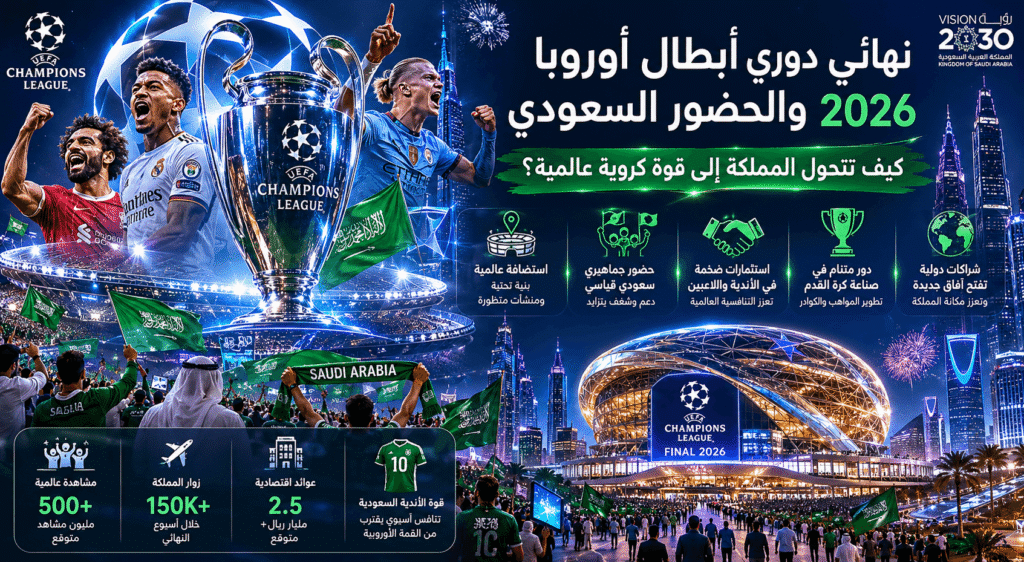
The 2026 UEFA Champions League final marked a defining moment in modern football, capping a season that introduced the expanded league format featuring 36 clubs in a single phase rather than traditional groups. As Europe’s elite battled for the most prestigious club title, the world’s attention also turned toward Saudi Arabia, whose accelerating investment in the sport is reshaping the global football landscape. The kingdom’s ambitions now stretch far beyond the Asian continent, positioning it as a rising force on the international stage.
The Champions League Final 2026: Details and Results
The 2025–2026 Champions League season delivered exceptional competition following the expansion of the tournament to 36 teams. Europe’s strongest clubs reached the final after a grueling campaign, competing for one of the most coveted trophies in the history of the game. The season was distinguished by a remarkable technical level, thrilling goals, and unprecedented global interest. The radical change in the tournament format gave every match doubled significance, pushing major clubs to recalibrate their tactical and physical preparations to ensure qualification to the knockout rounds.
This new system narrowed the gap between elite and mid-tier clubs, creating more opportunities for the upsets that football fans around the world adore. With more high-profile matches in the early stages, the tournament generated record viewership and engagement, reinforcing the Champions League’s status as the pinnacle of club football and a global commercial powerhouse.
Saudi Investment in Football: A Kingdom Conquering European Football
Since 2023, Saudi Arabia has injected more than six billion dollars into signing some of the biggest stars in world football, transforming its domestic league into a genuine international event that attracts fans from every corner of the globe. The kingdom is also planning to host the 2034 FIFA World Cup, prompting massive investment in stadiums, infrastructure, and the broader sporting ecosystem. This strategy is not merely a display of financial power but a deliberate plan to elevate competition and increase the league’s appeal to a worldwide audience.
Saudi clubs are reinvesting these resources into youth academies and training facilities, aiming to develop local talent alongside the international superstars. The goal is to raise the technical standard of the Saudi player and accelerate the pace of competition, building a sustainable model rather than relying solely on imported talent.
The History of Saudi Football and Its Journey of Development
Saudi Arabia’s football rise did not emerge from nowhere. It is the fruit of a long journey that began with the founding of the Saudi Arabian Football Federation in 1956 and its joining FIFA the same year. The national team has achieved notable continental success, including winning the Asian Cup three times and repeatedly qualifying for the FIFA World Cup since its historic debut in 1994, when it reached the round of sixteen. This rich football heritage has given the kingdom a massive fan base and organizational expertise that now enables it to enter a new phase of global ambition.
Traditional Saudi clubs such as Al-Hilal, Al-Nassr, Al-Ittihad, and Al-Ahli have formed the backbone of this journey, accumulating domestic and Asian titles that rank them among the most decorated clubs on the continent. Today these clubs invest heavily in their infrastructure and academies to develop homegrown talent while attracting world-class stars, a formula designed to lift standards across the board.
The Transfers That Changed the Face of the League
The arrival of Portuguese superstar Cristiano Ronaldo at Al-Nassr in early 2023 was a watershed moment, opening the door to a wave of blockbuster signings including Karim Benzema, Neymar, Sadio Mane, Riyad Mahrez, Ruben Neves, and Kalidou Koulibaly, among others. These transfers raised the league’s marketing value to unprecedented levels and drew the attention of major global media outlets. They were not simply financial statements but part of a calculated strategy to boost competitiveness and make the league more attractive to viewers worldwide.
Despite the controversy surrounding some of these moves, the numbers point to a marked rise in viewership and stadium attendance, alongside growing sponsorship and broadcasting deals. The Saudi Pro League has become a talking point on major sports platforms, which now treat it as a rising competitor worthy of extensive coverage after years on the margins of international attention.
Stadium Infrastructure and World Cup Preparations
The bid to host the 2034 World Cup is a primary driver of investment in sporting infrastructure, with Saudi Arabia planning to build and develop a number of modern stadiums equipped with the latest technology across cities including Riyadh and Jeddah. These projects include enormous venues with large seating capacities, in addition to training facilities, hotels, and advanced transport networks designed to deliver an exceptional experience for fans and players alike. This infrastructure investment serves not only the World Cup but leaves a lasting legacy that strengthens the kingdom’s standing as a global sporting and tourism destination.
These projects align with Saudi Vision 2030, which places sport at the heart of plans for economic diversification and improved quality of life. Investment in stadiums and facilities generates jobs and stimulates the tourism, hospitality, and entertainment sectors, while embedding a community sporting culture that encourages broad participation.
Impact on the Sports Economy and Tourism
The effect of Saudi football investment has spread well beyond the pitch to the wider national economy, with major sporting events energizing the sports tourism sector and attracting visitors from around the world. Estimates suggest that the sports sector is contributing increasingly to the gross domestic product, with expectations of continued growth driven by huge investments and upcoming global events. This shift reflects a new economic model that views sport as a standalone industry capable of generating revenue and creating employment.
Partnerships with global brands and broadcasters have raised the commercial value of the league’s rights, providing additional financial resources that are reinvested in developing the football system. As the league’s international popularity grows, its base of fans and consumers expands, opening promising long-term commercial horizons.
Expert Opinions and Sustainability Challenges
A number of football experts regard the Saudi experience as one of the most ambitious sporting projects in the world, yet they stress the importance of sustainability and not relying solely on attracting stars in the twilight of their careers. The experts emphasize that the real challenge lies in developing local talent and building an integrated coaching system that ensures lasting success independent of foreign names. They also call for investment in technical, administrative, and medical staff to raise the efficiency of the entire ecosystem.
Analysts note that the long-term success of the project will be measured by the national team’s ability to compete at the 2034 World Cup on home soil, and by how much the Saudi player develops through contact with global stars. The ultimate goal is not merely to host a global event but to build a genuine and sustainable football power that places the kingdom among the leading nations in the world of football.
Comparison: Saudi Pro League vs La Liga vs Premier League
| Criterion | Saudi Pro League | La Liga (Spain) | Premier League (England) |
|---|---|---|---|
| Founded | 1976 | 1929 | 1992 (modern era) |
| Number of clubs | 18 | 20 | 20 |
| Recent investment level | Very high ($6B+ since 2023) | High | The highest globally |
| Global star power | Rapidly growing | Strong | The strongest worldwide |
| Global popularity | Rising fast | Very high | The most watched league |
| 2026 outlook | Expansion & World Cup 2034 prep | Stable | Market leadership |