
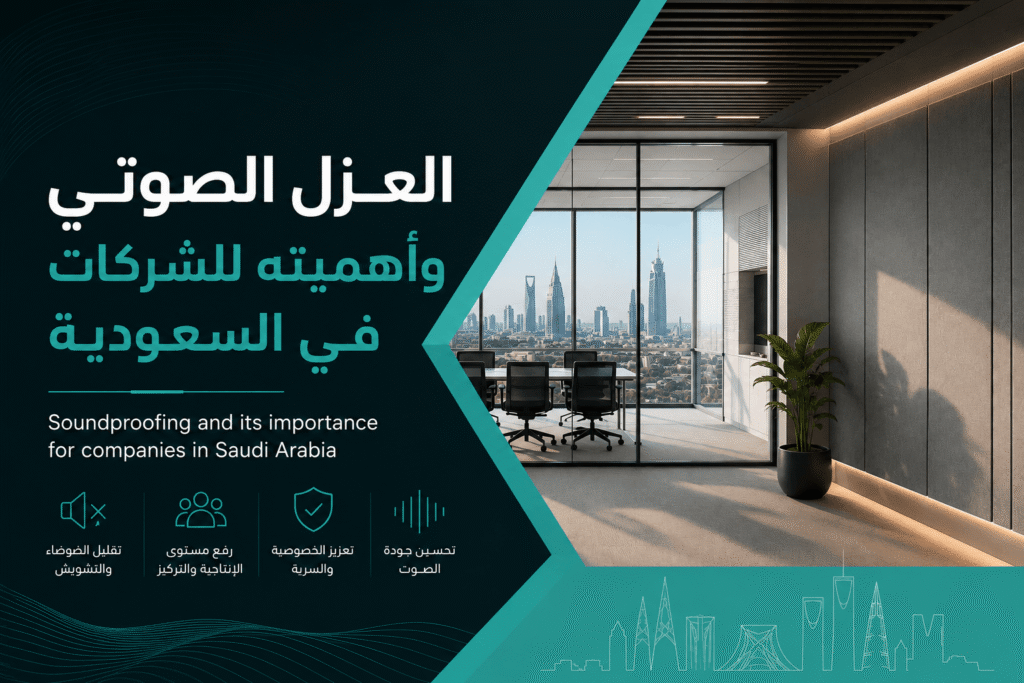
Introduction: Why Sound Insulation Is a Business Necessity, Not a Luxury
Amid the rapid economic transformations taking place in Saudi Arabia under Vision 2030, the ideal work environment has become a critical factor in achieving productivity and institutional success. Among the most significant factors directly affecting workplace quality is noise pollution — unwanted sound that disrupts focus, communication, and well-being. For this reason, sound insulation has become one of the most important technical solutions sought by companies and institutions across the Kingdom, whether in Riyadh, Jeddah, Dammam, or other major Saudi cities.
In this comprehensive guide, we will explore the concept of sound insulation, its types, its benefits for businesses, the specifications required under Saudi regulations, and practical tips for choosing the best sound insulation solutions suited to your business needs.
What Is Sound Insulation?
Sound insulation is a system of technologies and materials used to limit the transmission of sound from one place to another — whether from inside to outside or vice versa. It involves treating walls, ceilings, floors, windows, and doors with special materials that absorb, reflect, or block sound transmission. Sound insulation solutions fall into two main categories:
- Sound Insulation (Soundproofing): Aims to prevent external sounds from penetrating the interior space, or to stop internal sounds from leaking outward. This is also known as noise isolation.
- Sound Absorption (Acoustic Treatment): Aims to control the quality of sound within the room itself by reducing echoes and acoustic reflections.
Why Sound Insulation Matters for Businesses in Saudi Arabia
Many companies in Saudi Arabia suffer from noise problems, especially in high-density industrial and commercial areas. The repercussions extend to employee productivity, mental health, and even customer trust in the organization. Here are the key benefits that sound insulation offers to businesses:
1. Improving Employee Productivity
Multiple scientific studies have proven that workplace noise significantly reduces productivity. According to research published by the World Health Organization (WHO), continuous exposure to noise is one of the most prominent occupational stressors leading to reduced concentration and work performance. By implementing effective sound insulation solutions, businesses can improve the work environment and enhance employee focus, positively impacting overall productivity.
2. Preserving Information Confidentiality
In sensitive sectors such as banking, legal firms, consulting companies, and hospitals, maintaining confidentiality of information is paramount. Sound insulation helps prevent sensitive conversations from leaking outside designated rooms, ensuring greater compliance with privacy and data protection requirements set by the National Cybersecurity Authority (NCA) of Saudi Arabia.
3. Compliance with Saudi Regulations and Standards
The Saudi Standards, Metrology and Quality Organization (SASO) issues precise technical standards related to noise levels in workplaces. Compliance with these standards protects businesses from regulatory fines and enhances their market reputation. Non-compliance can result in penalties and operational disruptions.
4. Enhancing Customer Experience
In sectors such as hospitality, retail, financial services, and healthcare, the acoustic environment plays a pivotal role in customer perception. A quiet and comfortable space reflects the company’s professionalism and encourages customers to trust and continue doing business with the organization.
5. Protecting Employee Health
Continuous exposure to high levels of noise leads to serious health problems, including hearing loss, high blood pressure, and psychological disorders. The Ministry of Human Resources and Social Development emphasizes the necessity of providing a safe and healthy work environment for workers, and sound insulation is a key contributor to achieving this goal.
Common Sound Insulation Materials Used in Saudi Arabia
Sound insulation materials and systems available in the Saudi market vary in efficiency, cost, and application areas. The most prominent include:
- Acoustic Gypsum Boards: Widely used on walls and ceilings, they are known for their high sound absorption efficiency and ease of installation.
- Rock and Glass Wool: Among the most common materials in commercial and industrial sound insulation projects, they offer excellent thermal and moisture resistance in addition to superb sound insulation.
- Acoustic Foam Panels: Used in studios, meeting rooms, and conference halls, they are lightweight and easy to install.
- Double Glazing Glass: A comprehensive window insulation solution that effectively reduces external noise transmission — ideal for buildings near busy areas or airports.
- Floating Floors: Used in hotels, hospitals, and multi-story office buildings to reduce noise from footsteps and machinery.
- Specialized Acoustic Doors: Provide a complete sound barrier, used in confidential meeting rooms and server rooms.
Sectors That Particularly Benefit from Sound Insulation in Saudi Arabia
Industrial and Manufacturing Sector
Factories and industrial facilities in Saudi economic zones such as Jubail and Yanbu generate high levels of noise. Implementing sound insulation solutions protects workers and achieves compliance with the requirements of the Saudi Authority for Industrial Cities and Technology Zones (MODON).
Hotels and Hospitality Sector
Given the tourism boom that Saudi Arabia is witnessing, major hotel chains pay great attention to the quality of their acoustic environment. Good sound insulation ensures guest comfort and boosts hotel ratings significantly.
Education Sector
The Saudi Ministry of Education recommends providing a suitable acoustic environment in classrooms. Sound insulation in schools and universities reduces distraction and enhances student concentration, leading to better learning outcomes.
Healthcare Sector
Hospitals and clinics require a quiet environment to ensure patient comfort and privacy of medical consultations. Sound insulation in healthcare facilities is a fundamental requirement rather than an option, mandated by both local and international quality standards.
Telecommunications and Media Sector
Radio and television studios and call centers require high levels of sound insulation to ensure production and broadcast quality — a core investment in this sector that directly impacts output quality and efficiency.
International Quality Standards for Sound Insulation
When choosing a sound insulation system for your business, it is important to pay attention to internationally recognized standards:
- STC (Sound Transmission Class): Measures the ability of a barrier to reduce sound transmission. The higher the value, the better the insulation.
- NRC (Noise Reduction Coefficient): Measures the sound absorption rate of materials, ranging from 0 to 1, where 1 indicates complete absorption.
- ISO 140 and ISO 717 Standards: International standards from ISO for measuring sound insulation in buildings, widely recognized and applied globally.
How to Choose the Right Sound Insulation Company in Saudi Arabia
Choosing the right partner to implement a sound insulation project is a strategic decision. Here are the key criteria to consider:
- Experience and Reputation: Choose a company with a proven track record in implementing similar projects in the Saudi market.
- Quality of Materials: Ensure the materials carry internationally recognized quality certifications.
- Warranty and After-Sales Service: A reputable company provides long-term guarantees on its work and materials.
- Customized Design: Every building and business activity has different acoustic requirements; choose a company that offers tailored solutions rather than one-size-fits-all approaches.
- Compliance with Local Standards: Ensure the company complies with SASO standards and relevant regulatory bodies.
To explore the best specialized sound insulation solutions for businesses in Saudi Arabia, you can contact the experts at Sound Insulation Company in Saudi Arabia, who provide comprehensive and integrated solutions tailored to the needs of various commercial and industrial sectors.
Sound Insulation Within the Vision 2030 Framework
In the context of the major transformations taking place in Saudi Arabia under Vision 2030, large-scale infrastructure and urban development projects represent exceptional opportunities to apply the latest sound insulation solutions. From NEOM to the Red Sea Project, and from the development of central Riyadh to smart city projects, all incorporate acoustic environment quality as a core design criterion.
Furthermore, private sector support initiatives led by the Ministry of Investment provide additional motivation for both foreign and local companies to raise their workplace standards, including the acoustic dimension of their facilities.
Sound Insulation: An Investment with Tangible Returns
Many companies hesitate to invest in sound insulation due to the perceived initial cost, but economic calculations prove that the return on this investment is high and tangible. Improving employee productivity by just 10% may equal the total cost of installing a sound insulation system within a single year. Add to this the avoidance of regulatory fines, improved customer satisfaction, and reduced employee turnover rates, and you will find that sound insulation is a strategic investment, not an optional expense.
The cost of sound insulation projects in Saudi Arabia varies according to project size, materials used, and the level of insulation required, making it important to obtain a detailed study and feasibility analysis before making a decision.
Steps for Successfully Implementing a Sound Insulation Project
- Current Assessment: Conduct a comprehensive field study to measure current noise levels in the facility and identify their sources.
- Define Objectives: Determine the required insulation level based on business activity and applicable regulatory standards.
- Choose Appropriate Solutions: Design an integrated sound insulation system covering walls, ceilings, windows, and doors according to building requirements.
- Professional Implementation: Engage specialized teams in installing sound insulation systems according to international standards.
- Testing and Verification: Conduct acoustic measurements after implementation to ensure objectives have been achieved.
- Regular Maintenance: Establish a regular maintenance plan to sustain the efficiency of the sound insulation system over the long term.
Conclusion
Sound insulation is no longer merely a luxury or secondary option in the business world — it has become a strategic necessity that determines a company’s ability to compete and provide an ideal work environment for its employees and customers. Given Saudi Arabia’s rapid economic expansion and increasingly demanding regulatory requirements, companies that invest today in comprehensive sound insulation solutions will reap the rewards of this decision in the long run.
Whether you manage a commercial office, industrial facility, hotel, hospital, or educational institution, connecting with specialists in sound insulation is the first step toward a quieter, more productive, and more professional work environment. Do not hesitate to reach out to the experts at Sound Insulation Company in Saudi Arabia for a free and customized consultation tailored to your business needs.