Saudi Arabia’s weather warnings for Friday, October 16, 2026 call for checking the location and timing of weekend plans. Red heavy-rain alerts cover specific places in the west and southwest, while the national forecast describes a wider pattern of possible thunderstorms. For a family travelling between governorates or planning time in the highlands, the useful question is which notice applies to the actual journey. A regional headline alone cannot answer that question.
Review scope: Prepared on the morning of October 16, 2026 using the National Center for Meteorology’s Arabic daily bulletin published at 07:00 and the official warning pages available during preparation. Every warning time below is Saudi Arabia local time. This is a dated report, rather than an automatically updating alert service. Check the official notice again before travelling because details can change.
Friday’s national weather outlook
The NCM daily weather report forecasts moderate to heavy thunderstorms over parts of Jazan, Asir, Al-Baha and Makkah, together with parts of Hail, Al-Jouf and the Northern Borders. Possible effects include flash flooding, hail, dusty winds and reduced visibility. Lighter rain is forecast in parts of Madinah, Tabuk and the Eastern Province, with possible coastal fog overnight and early in the morning.
The broader outlook provides context, but a local warning supplies the detail needed for a particular plan. Large regions contain many different locations, so the same intensity should not be assumed everywhere. The examples below identify named governorates and their validity periods. They are selected notices with clear published details, rather than a complete inventory of every warning in the Kingdom.
Heavy-rain warning examples and their times
The official NCM early-warning page displays red heavy-rain notices for locations in Makkah, Al-Baha, Asir and Jazan. The following table concerns Friday, October 16. A notice can be issued and visible before its stated start time; its appearance does not establish that heavy rain is already occurring at the reader’s location.
| Region | Named locations | Saudi local time | Official detail |
|---|---|---|---|
| Makkah | Al-Ardiyat | 13:00–20:00 | Al-Ardiyat warning |
| Al-Baha | Al-Baha, Al-Qura, Al-Mandaq, Baljurashi and Bani Hasan | 12:00–20:00 | Al-Baha warning |
| Asir | Al-Majardah and Bariq | 12:00–20:00 | Al-Majardah and Bariq warning |
| Jazan | Al-Harth, Al-Dair, Al-Reeth, Al-Aridah, Al-Aydabi, Fayfa and Harub | 12:00–20:00 | Jazan governorates warning |
These pages list possible strong winds, severely reduced visibility, hail, lightning and flash flooding. Their descriptions concern forecast hazards, rather than verified damage at every named place. This article does not claim that a particular road has flooded, or that a facility has closed. Such statements require separate evidence from the responsible authorities. No local rainfall total or measured wind speed is supplied without a published observation supporting it.
Read the issue date and validity period separately
A warning issued on Thursday evening can legitimately apply to Friday afternoon. The issue date tells readers when the notice was released; the start and end times indicate the period it covers. For example, the Al-Ardiyat notice was issued on October 15 and identifies a period beginning at 13:00 on October 16. Reading only one of those dates can lead to the wrong conclusion about whether the notice is relevant.
The listed end time also should not be treated as confirmation that every affected route has returned to normal. Forecast validity and actual road conditions answer different questions. If a journey includes an evening return, check the latest local information before leaving again. Keeping the official link on a phone is more useful than relying on a screenshot whose date or expiry time may have been cropped out.
Make the journey part of the weather check
Write down the departure point, destination, intended departure and return times. Then compare those plans with the relevant official notices. A warning along the route may matter even when conditions at home appear calm. This simple exercise organises the information needed for a decision; it cannot replace road instructions, an official closure notice or directions given by personnel at the location.
- Open the warning and check its date, place and validity period.
- Look for an updated version before leaving.
- Reconsider outdoor plans that overlap with a severe-weather warning.
- Tell anyone waiting for you about a changed arrival time.
- Check the return journey separately instead of assuming the outward assessment remains current.
Families arranging a weekend outing can consider a later date, an indoor activity or cancelling an unnecessary journey when warnings conflict with their plans. A weather alert is useful precisely because it arrives before every consequence becomes visible. Waiting for dramatic conditions outside the window removes some of that planning benefit. Where a responsible local authority provides a specific instruction, follow that direction when deciding what to do next.
Civil Defense advice for rain and flowing water
Saudi Civil Defense’s heavy-rain guidance advises staying away from low ground, water accumulation and wadis, and avoiding attempts to cross flowing floodwater. For emergency assistance, the guidance identifies 911 in Makkah, Madinah, Riyadh and the Eastern Province, and 998 elsewhere in the Kingdom. Keep those numbers for genuine emergencies and follow the responding authority’s instructions when reporting a problem.
The agency’s rain and flood hazards guidance also advises avoiding watercourses and wet electrical wiring or equipment. Photographing rainfall is not a reason to approach a dangerous location. Assistance to another person should not create another casualty: contact the competent emergency service rather than entering a hazardous situation without the ability to help safely.
Check the age of shared videos and screenshots
A short video can show real rainfall while still carrying an incorrect location or date in its caption. Before sharing it, look for an identifiable source, a stated location and a date that can be checked. If those details are missing, sharing the official warning link is more useful than presenting an uncertain clip as evidence of conditions in a named governorate. A confident caption cannot substitute for verification.
Apply the same care to claims about school arrangements, cancelled events and road closures. None of those decisions follows automatically from a weather colour on a map. Each requires an announcement from the organisation responsible, with a date and geographic scope. This report explains the weather notices available during preparation; it does not announce operational decisions on behalf of schools, event organisers or road authorities.
Why previous weather reports need their dates
SaudiWe previously covered Saudi rain and flood warnings for October 9. That report provides dated context, but its locations and time windows belong to that day. Reusing a previous table as Friday’s guidance would be misleading even if some regional names appear again. A meaningful comparison keeps both dates visible and checks the current official notices independently.
Today’s table is designed as a starting point for finding the relevant detail quickly. If an updated NCM notice differs from an example here, use the newer official version. Absence from this short selection does not establish that a place has no warning. Readers should search for their own locality instead of interpreting a summary as a complete map of conditions across the country.
Questions to settle before leaving
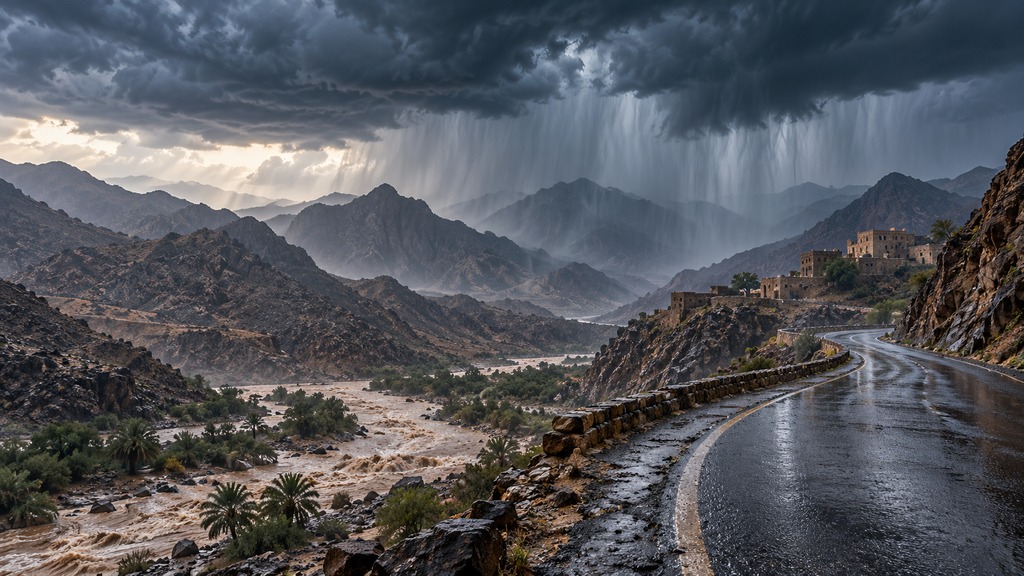
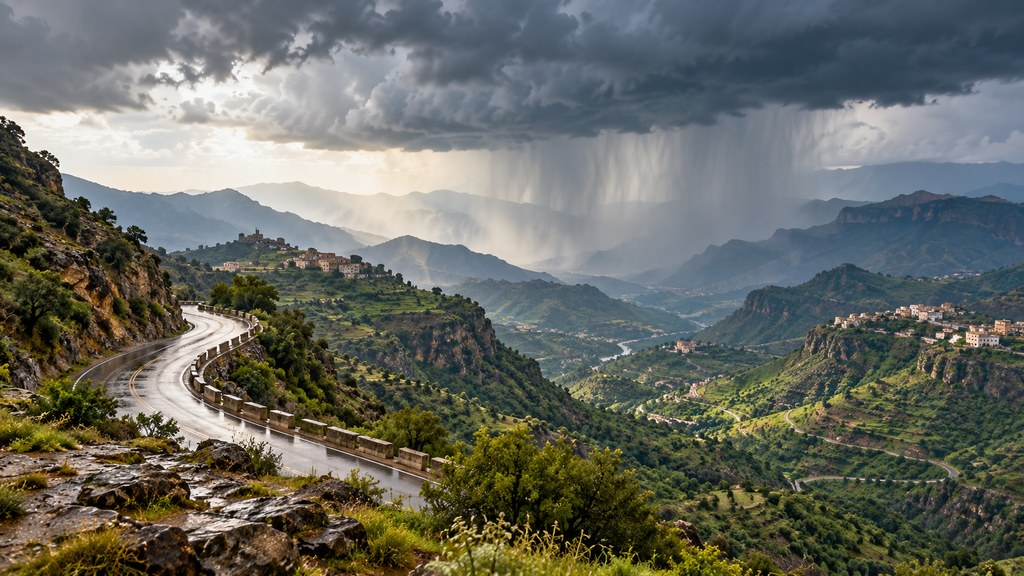
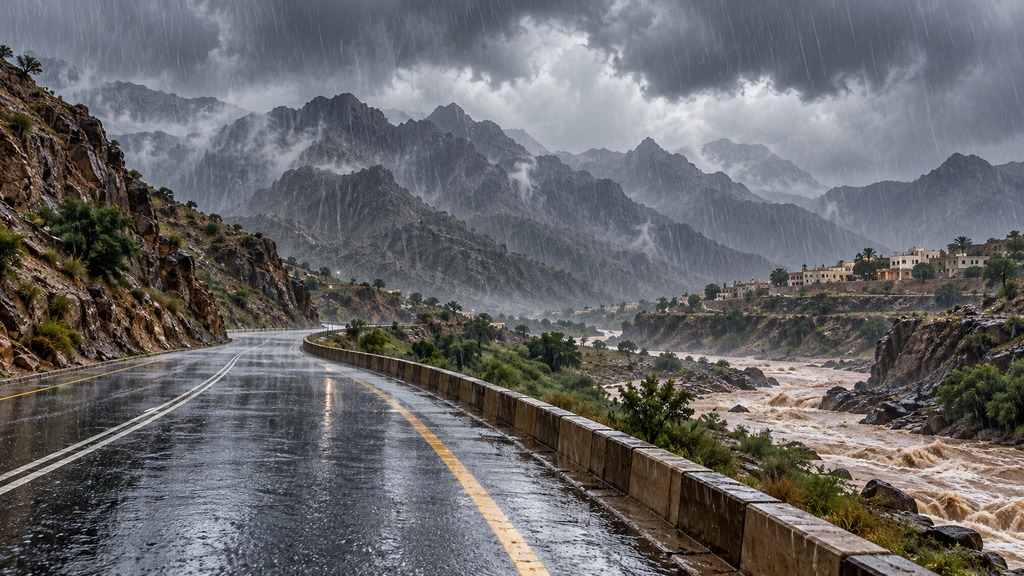
Does this cover all Saudi cities? No. The notices have defined geographic boundaries. Will rain begin everywhere at the stated minute? A warning does not predict the movement of every cloud or conditions in every street. Is the cover a photograph from today’s weather? No. It is an original conceptual illustration of rainfall in a highland landscape, rather than field evidence from a particular incident.
Before setting out, establish the latest notice for the location, the period it covers and any instruction affecting the route. That keeps the weather check practical without exaggerating the forecast or dismissing official warnings. NCM, Civil Defense and the responsible local authorities remain the reference as circumstances develop throughout the day.