
In an era where technological transformation is accelerating at an unprecedented pace, Artificial Intelligence (AI) has become the foundational pillar of the modern knowledge economy. AI is no longer just an academic concept — it has evolved into a tangible reality touching the lives of billions of people daily, through applications ranging from virtual assistants and self-driving cars to disease diagnosis and creative content generation. In 2026, this sector has witnessed a quantum leap that placed it at the heart of every technological, economic, and even philosophical discussion.
What is Artificial Intelligence and Why Does It Matter Today?
Artificial Intelligence is a branch of computer science that aims to simulate human intelligence in machines, enabling them to learn, think, and adapt. This vast field encompasses multiple technologies, most notably: Machine Learning, Deep Learning, Natural Language Processing (NLP), and Computer Vision.
The importance of AI today extends far beyond the boundaries of technology; it is redrawing labor market maps, reshaping concepts of creativity and innovation, and determining who will hold economic power in the coming decades. According to estimates by the McKinsey Global Institute, AI is expected to add between $13 and $15 trillion to the global economy by 2030.
The Most Prominent AI Platforms in 2026
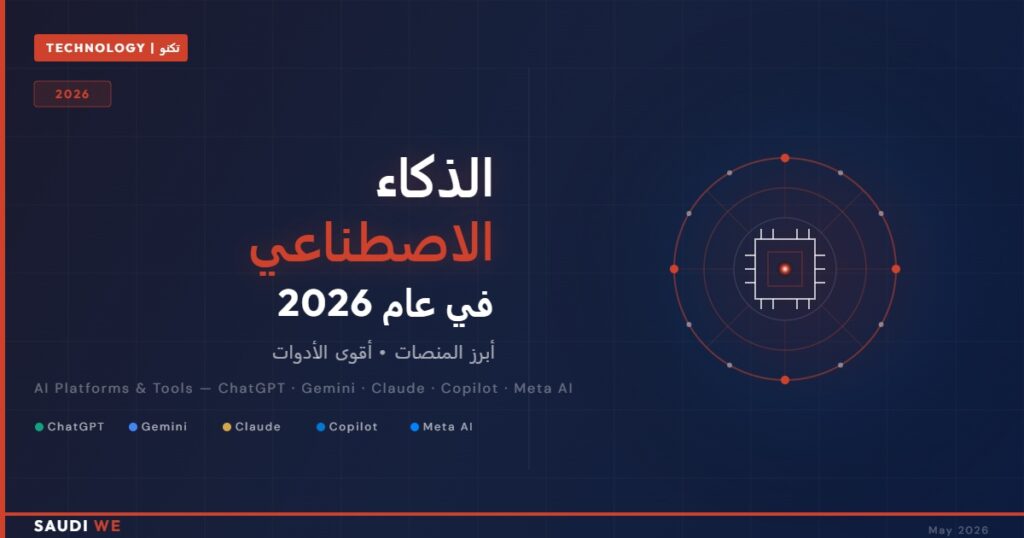
With the rising global interest in this revolutionary technology, dozens of companies have competed to offer advanced AI solutions. Here are the most prominent platforms that have established their global status in 2026:
1. ChatGPT by OpenAI
ChatGPT from the American company OpenAI is considered one of the most famous and widely-used generative AI models in the world. Launched in 2022, this model achieved unprecedented success, surpassing 200 million active monthly users. In 2026, OpenAI introduced the latest generation of this model with advanced capabilities including multimodal interaction (text, images, audio, video), the ability to conduct complex research tasks, and the development of integrated software applications.
The platform offers a free version for regular users and a professional version (ChatGPT Plus) at $20 per month, as well as enterprise solutions for large companies. The platform stands out for its easy-to-use interface, ability to answer complex questions, write code, and produce creative content in various styles.
2. Gemini by Google
Facing the OpenAI challenge, Google launched its large model Gemini, which combines the vast search capabilities of Google’s search engine with advanced generative AI capabilities. What distinguishes Gemini is its deep integration with the entire Google services ecosystem: Gmail, Google Docs, Google Drive, and YouTube, making it a comprehensive digital partner in the user’s daily life.
Gemini is available in three versions: Nano (for mobile devices), Pro (for general use), and Ultra (for complex tasks), making it a flexible choice suitable for different needs and budgets. In 2026, Google introduced substantial improvements to Gemini’s capabilities in handling geospatial data and in-depth scientific analysis.
3. Claude by Anthropic
The Claude model from Anthropic presents itself as the safest and most trustworthy choice in the world of generative AI. Anthropic adopts a “Constitutional AI” methodology that ensures the model is helpful, safe, and honest simultaneously. Claude has demonstrated high efficiency in tasks of deep analysis, writing academic papers, programming, and handling lengthy documents.
In 2026, Anthropic introduced Claude 4 and Claude 4.5 with exceptional capabilities in logical reasoning and complex inference, making this model the preferred choice for researchers and professionals in law, medicine, and business.
4. Microsoft Copilot
Microsoft has invested heavily in OpenAI and integrated AI technologies into its entire product suite, most prominently Microsoft Copilot. Copilot is today the most widely used tool in professional business environments, seamlessly integrating with all Microsoft 365 applications: Word, Excel, PowerPoint, Outlook, and Teams.
Copilot helps users draft professional emails, create stunning presentations, analyze complex spreadsheets, and automatically summarize long meetings. According to Microsoft, Copilot usage has increased employee productivity by up to 70% in some tasks.
5. Meta AI
Meta (the parent company of Facebook, Instagram, and WhatsApp) did not lag behind in this intense race. Meta launched its open-source model Llama, which revolutionized the world of open-source AI, and the Meta AI platform integrated into its major social applications. What distinguishes Meta is its commitment to the principles of openness and transparency, allowing developers around the world to build their own applications based on its open models.
6. Midjourney and DALL-E: The Visual AI Revolution
In the field of visual creativity, Midjourney and DALL-E from OpenAI have emerged as the most powerful AI image generation tools. These platforms allow the creation of realistic photographic images and stunning artwork from a simple text description. In 2026, the quality of AI-generated images has reached a level that is sometimes difficult to distinguish from real images, raising profound questions about the future of graphic design and photography as professions.
7. Sora: The Future of Intelligent Video
Sora from OpenAI caused widespread excitement with its exceptional capabilities for generating professional video clips from written text alone. The platform can now produce clips up to two minutes long with high quality and striking realism, representing a radical transformation in the film and digital content production industry. This technology is redefining the concept of visual content production and making it accessible to anyone, regardless of their financial means or technical skills.
AI in Saudi Arabia and the Arab World
Saudi Arabia is not standing on the sidelines in this global technological race; rather, it occupies a pioneering position in adopting and developing AI technologies. Within the framework of Vision 2030, the Kingdom has allocated enormous investments to build advanced digital infrastructure, and has established specialized AI centers such as the King Abdulaziz Center for Quantum Computing and the Saudi Data and AI Authority (SDAIA).
The Kingdom has also launched its own Arabic language AI model through SDAIA, which represents a qualitative step toward a purely Arabic AI that respects the particularities and complexities of the Arabic language. Riyadh has also hosted several of the world’s largest AI conferences and signed strategic partnerships with major global technology companies such as NVIDIA, Google, and Microsoft.
The Impact of AI on the Job Market
AI sparks widespread debate about the future of the job market; while some see it as a direct threat to traditional jobs, others view it as a creator of new job opportunities we have never imagined before. The reality is more complex and nuanced than either viewpoint.
Reports from the World Economic Forum indicate that AI will eliminate some routine repetitive jobs, but in turn will generate new types of jobs that require creative skills, critical thinking, and the ability to collaborate with intelligent systems. The most sought-after skill in the future job market will be the ability to work with AI tools and deploy them effectively to achieve specific goals.
Ethics and Challenges: The Other Side of the Story
We cannot discuss AI without addressing the ethical and social challenges associated with it. The most prominent of these challenges include: issues of privacy and personal data protection, the risk of algorithmic bias that could lead to unfair decisions against certain segments of society, and concerns about the spread of Deepfakes that threaten trust in digital content.
In response to these challenges, several governments have begun drafting regulatory legislation for AI. The EU AI Act is one of the most prominent of these regulations, classifying AI applications according to their level of risk and establishing strict rules and controls for each category. UNESCO is also working to establish international standards for AI governance to ensure respect for human rights and human dignity.
How to Start Your AI Journey?
If you want to benefit from the AI revolution and join this new digital world, here are some practical steps to get started:
- Start with free tools: Try ChatGPT, Gemini, and Claude — you’ll find their interfaces easy to use, requiring no prior technical knowledge.
- Define your field: The AI specialization is very broad, so look for the application that specifically serves your professional field or personal interests.
- Learn continuously: The field is evolving at an astonishing pace, so follow developments through platforms like Coursera and edX that offer specialized AI courses.
- Engage with digital communities: Join forums and communities of developers and AI enthusiasts to exchange experiences and stay abreast of the latest developments.
Conclusion: We Stand at a Crossroads
The world today stands at a pivotal moment in human history — an artificial intelligence evolving at a pace that exceeds the expectations of even the most optimistic observers. The question is no longer “Will AI change our lives?” but has become “How do we adapt to it and harness it to build a more prosperous and just future for all?”
In Saudi Arabia and the Arab world in general, exceptional opportunities are taking shape for those who take the initiative to acquire AI skills and apply them in business, healthcare, education, and entertainment. The future belongs to those who invest today in learning these technologies and understanding their capabilities and limitations.
Follow us on Saudi We for more specialized articles in the world of technology and business.