What Is a Wedding Zaffa?
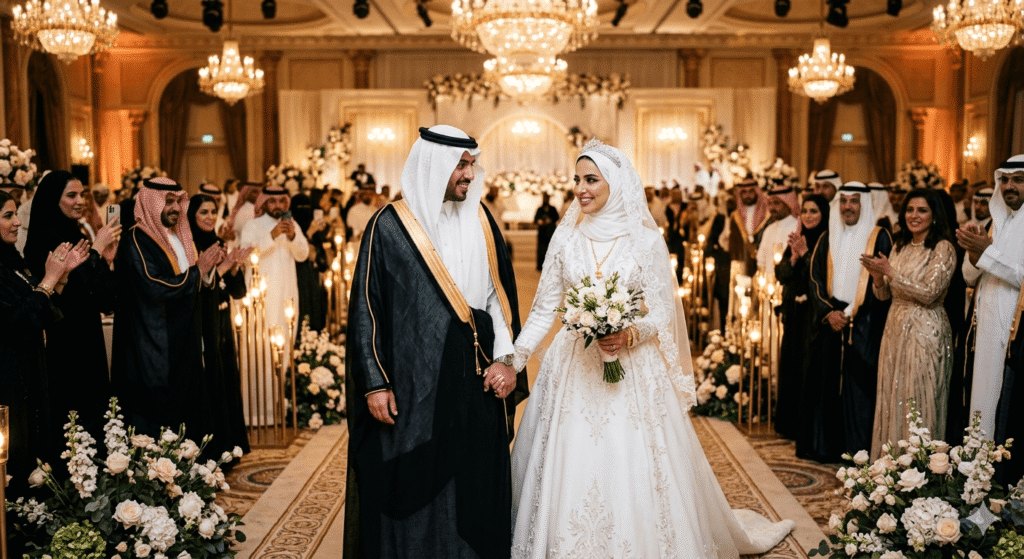
A zaffa is the music, chant, or musical performance that accompanies the bride — and sometimes the groom or both together — as they make their entrance into the wedding hall. The word derives from the Arabic root zaffa, which historically referred to the ceremonial procession that escorted the bride to her new home, accompanied by singing and traditional percussion.
Over the centuries, this tradition has evolved from a walking procession with drums and folk singing into a fully produced musical experience designed to reflect the bride’s personality and set the tone for the entire celebration. In Saudi and Gulf culture, the zaffa is not background music — it is the centrepiece moment of the evening that guests anticipate and by which the event is often remembered. Research on wedding memory consistently shows that the bridal entrance is among the most recalled moments by guests, making the choice of zaffa a decision with genuine emotional weight.
How Wedding Entrances Have Evolved in Saudi Arabia
Saudi wedding entrance music has undergone a dramatic transformation over the past decade. Not long ago, the options available to most brides were limited to a handful of widely shared chants heard at celebrations across entire cities. Today, the market offers hundreds of diverse options ranging from traditional energetic shilas to full Western orchestral arrangements.
Several forces have driven this change: the rise of streaming platforms expanding musical exposure, the proliferation of local professional-grade recording studios, growing demand for personalisation in all aspects of weddings, and the cultural shift toward treating wedding planning as a creative expression. Equally significant is the expansion of zaffa culture beyond weddings — it is now common at graduation parties, engagement celebrations, and family milestones.
Popular Types of Zaffa Performances
Traditional Saudi Zaffa
Rooted in regional folk music traditions, the traditional zaffa relies on percussion instruments such as the duff and tabl, accompanied by regional vocals that vary from Hijazi to Najdi to Southern styles. Its strength lies in its authenticity and its ability to resonate across generations, particularly among older guests.
Gulf-Style Shila
Perhaps the most widely used form of zaffa in Saudi Arabia, the shila features emotionally charged lyrics — typically centred on praise of the bride, the family, and the occasion — delivered over a rising rhythmic arc that builds from a calm opening into an energetic crescendo. Its appeal is broad and cross-generational.
Orchestral Zaffa
An increasingly popular choice for high-end hotel weddings and formal celebrations, orchestral arrangements deploy string sections, brass, and full ensemble compositions to create a cinematic entrance atmosphere. This style projects elegance and formality and is particularly favoured when the venue’s acoustics can support it.
Modern Wedding Entrance Music
A broad category that blends Eastern and Western musical elements in a contemporary format. This often involves rearranged versions of well-known songs — Arabic classics or international hits — given a fresh production. It appeals most to younger brides who want their entrance to reflect an individual aesthetic.
Female-Only Celebrations
In segregated female celebrations, musical choices expand considerably to include performances by female artists and live musicians. This setting often allows for the most creative and personalised approaches to the entrance, with fewer constraints on style or instrumentation.
How to Choose the Right Zaffa for Your Wedding
There is no single correct answer for all weddings. The ideal choice depends on a combination of factors:
Venue size and acoustics. A large hall accommodating hundreds of guests requires a zaffa with high energy and strong rhythmic drive to fill the space and engage everyone. An intimate family celebration in a smaller venue benefits from something quieter and more refined.
Guest count and age profile. Understanding the predominant age group of your guests helps guide the selection. High-energy shilas tend to engage all generations well, while some modern or Western-influenced arrangements may not resonate with older guests.
Wedding style and formality. A formal event has different expectations from a warm family gathering. The zaffa should harmonise with the overall atmosphere the couple is trying to create.
The bride’s personality. The zaffa ultimately reflects who the bride is. This is precisely why personalised zafat — custom compositions carrying the bride’s name and identity — have become one of the fastest-growing trends in the Saudi wedding market.
Live vs. Recorded Zaffa: Which Is Better?
This question recurs frequently in wedding planning discussions. A live zaffa creates a dramatic, irreplaceable atmosphere that no recording can fully replicate, and it can adapt in real time to the pace of the entrance. However, it requires precise advance coordination with performers, typically costs more, and needs additional space in the venue for setup.
A recorded zaffa allows greater control over final audio quality, is more practical for venues with limited space, and enables a full listening review before the event. Many couples at larger celebrations opt for a hybrid model: a high-quality recorded piece as the musical foundation, paired with a live vocalist or musician who adds spontaneous presence to the moment.
Understanding Zaffa Costs in Saudi Arabia
Zaffa pricing in the Saudi market varies widely, reflecting the range of quality and customisation available. Ready-made recorded zaffas are the most affordable option, often a few hundred riyals. Custom named recorded zaffas typically range from 500 to 2,000 SAR depending on the artist and studio. Live zaffas with a solo vocalist or musician start from around 2,000 SAR, rising with the performer’s profile. Full band or orchestral zaffas start from 5,000 SAR, potentially reaching significantly higher figures for premium events.
As a general planning guideline, professional wedding planners typically recommend allocating between 3% and 7% of the total wedding budget to music and entertainment elements, of which the zaffa is the centrepiece.
Common Mistakes Couples Make When Choosing a Zaffa
Choosing without listening first. Agreeing to a zaffa without hearing the final version in full is a mistake many regret. Always request a complete listening preview — and in the case of a named zaffa, verify that names are pronounced correctly.
Skipping the synchronisation test. A zaffa that sounds wonderful in isolation may not align rhythmically with the bride’s walking pace and the actual distance of the entrance. Rehearsing the walk with the zaffa playing is a step that should not be skipped.
Booking too late. During peak wedding seasons — which in Saudi Arabia include winter months and certain summer periods — demand for premium zaffa options rises sharply. Early booking secures preferred choices at reasonable prices.
Overlooking the venue’s sound system. The finest zaffa recording will fail to deliver its intended experience if the hall’s speakers are inadequate or incorrectly set up. Coordinating with the venue’s sound engineer beforehand is essential.
Not keeping backup copies. Technical issues at critical moments are always a possibility. The zaffa should be stored in multiple formats (MP3, WAV) and on multiple devices or storage media.
Why a Pre-Wedding Performance Review Matters
Many brides overlook a full dress rehearsal with the actual zaffa and are surprised on the night itself to discover that the timing is off, the sound does not carry clearly across the hall, or the piece ends before reaching the stage. A proper review means listening to the zaffa through the venue’s actual sound system, walking the real entrance distance with the music playing, and confirming the timing of when the music should start relative to the bride’s appearance. This review rarely takes more than an hour, but it eliminates months of uncertainty and ensures the moment unfolds exactly as envisioned.
Exploring Different Zaffa Styles
Before making any decision, listening to as wide a variety of options as possible is strongly recommended. General streaming platforms offer some exposure but do not always represent the quality standards of works produced specifically for wedding contexts. Couples looking to compare the range of Wedding Zaffa styles available in the Saudi market will find dedicated platforms useful for understanding musical patterns and production quality across different providers.
Wedding Entrance Trends in Saudi Arabia for 2026
Market observers tracking the Saudi wedding industry have identified several rising patterns in 2026. The named zaffa continues to grow, with adoption now extending well beyond weddings into graduations and other celebrations. Heritage-meets-contemporary blends — re-arranged classical Saudi songs with modern production — are gaining popularity for their ability to speak to multiple generations simultaneously. The “solo live performer + recorded backing” model is increasingly favoured as a middle-ground solution combining the presence of live performance with the reliability of a professionally produced backing track. The graduation zaffa segment is growing rapidly as Saudi families invest in marking educational milestones. Finally, there is a clear preference for shorter, more focused entrances of two to three minutes rather than longer pieces.
Frequently Asked Questions
How long should a zaffa typically be?
The ideal length is between 90 seconds and three minutes — enough time for the bride to walk from the entrance to the stage. A longer zaffa can feel drawn out, while a shorter one may not give the moment its due weight.
Can the lyrics of a zaffa be customised?
Yes. Named zaffas are written specifically for the couple, incorporating their names and relevant personal details, then composed, recorded, and produced in a studio. Delivery time typically ranges from three days to two weeks depending on the provider and current demand.
Is a live zaffa better than a recorded one?
Neither is universally superior. Each has distinct advantages and constraints as outlined above. The right choice depends on the nature of the celebration, the budget, and the bride’s preferences.
When should the zaffa be booked?
At least one month in advance is recommended for recorded zaffas. For live performances with bands or well-known artists, three months ahead is more appropriate. During peak wedding seasons, some providers extend their delivery timelines considerably.
Can a song by a famous artist be used as a zaffa?
Technically yes, but it is important to ensure the recording is of sufficient audio quality for the venue’s sound system — not simply a low-quality download from a streaming platform.
Final Thoughts
A zaffa is more than music playing as a bride enters a room. It is the first statement she makes on the most significant night of her life — an expression of identity, taste, and the tone she wishes to set for everything that follows. The right choice does not come from following what is trending or mirroring someone else’s celebration. It comes from understanding the event, listening carefully to options, testing the experience in advance, and ultimately trusting what feels genuinely right.