
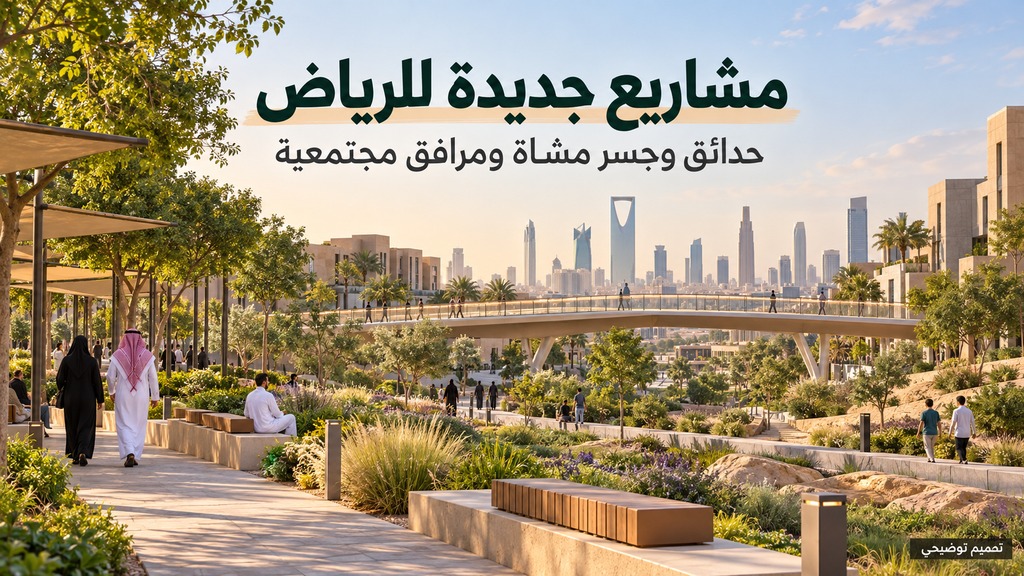
Riyadh’s public spaces and community facilities are the focus of a new package of development agreements announced by Riyadh Region Municipality. The municipality reported 15 agreements and community partnerships worth more than SAR 80 million through the second Azwah forum and award in 2026. The package includes parks, a pedestrian bridge and neighbourhood spaces, alongside cultural facilities and heritage work across the wider region.
These are agreements for development and services, not an announcement that new parks or a bridge have opened. This guide sets out the verified information and explains the questions residents can use to follow progress. Information was reviewed on 28 October 2026. Discussion of possible benefits and practical ways to assess facilities is SaudiWe editorial analysis, not an approved design or an official operating plan.
What has Riyadh Municipality announced?
The municipality’s report on the Azwah agreements is dated 27 October 2026. The Saudi Press Agency report detailing the package was published on 28 October. The difference between the event date and the coverage date explains why both dates appear online; it should not be read as evidence of two separate development packages.
The announcement covers Riyadh city and locations elsewhere in Riyadh Region. It would therefore be inaccurate to place every named facility inside the capital. The total value also relates to the agreements together, rather than a budget allocated entirely to one park or bridge. The information reviewed did not supply separate project budgets or a complete schedule of construction and opening dates.
The parks, bridge and neighbourhood facilities
The following table highlights selected elements rather than reproducing every agreement. It also identifies information that has not been specified, so residents can distinguish an announced project from a location ready to visit.
| Project or work | Announced detail | Not specified in the announcement |
|---|---|---|
| Al Arid neighbourhood park | A new park covering 5,227 square metres | Exact site and opening date |
| Pedestrian bridge on King Fahd Road | A connection between a metro station and a commercial complex | Station name, complex name and precise crossing location |
| Dakkah project | Three sites in three neighbourhoods, totalling 12,170 square metres | Neighbourhood names and area of each site |
| Another public park | An announced area of 941 square metres | Neighbourhood and internal facilities |
| Community facilities | A municipal centre for people with disabilities, and a sports field in Masharif Hills | Operating dates and access arrangements |
The regional elements include heritage rehabilitation in Hurmah and Sudus and operation of a cultural hall in Tumair. These place names matter because the programme extends beyond the city itself. Their inclusion does not establish current visiting hours, a public booking service or an immediate opportunity to tour a completed site.
What could the Al Arid park mean for residents?
A park’s area offers a starting point, but it cannot tell a resident how comfortable or useful the place will be. A smaller space with a convenient entrance and a continuous walking route can fit everyday life better than a larger site that is difficult to reach. This is a general way to assess public-space quality, rather than a claim about equipment or features already approved for Al Arid.
When a design or opening announcement becomes available, useful questions will concern shade, entrances, lighting, seating, maintenance and the way paths connect. Families may also want to know whether play facilities are provided, how children can be supervised and where people can rest. None of those features should be assumed from the park’s name or its published area alone.
For older residents and wheelchair users, the journey to the entrance is part of the experience. A visit might start at home or a vehicle drop-off point and involve pavements and crossings before reaching the park. Assessing that whole route can be more informative than judging a facility from a promotional image. Detailed access arrangements will need to be checked when official plans or operating information are published.
The bridge and the last part of a metro journey
The announced bridge would connect a metro station with a commercial complex on King Fahd Road. The source reviewed did not identify either destination by name, so this guide does not guess the station or publish a speculative map. The announcement also does not establish an existing diversion, a changed station entrance or a construction start date.
For passengers, the potential value of this type of connection lies in the last part of the journey: getting from the station to the place they actually want to reach. A clear pedestrian route can make a trip easier to understand. Whether this particular bridge shortens walking time or provides a suitable route for every user depends on its final layout and access features.
Once implementation information appears, residents should look for any officially designated temporary walking routes and entrance instructions. A drawing of a future bridge is not permission to cross a construction site or use an unsafe route. This is general travel advice; it should not be interpreted as a report that construction or traffic changes have already begun.
Reading the impact of neighbourhood projects
Developing several community spaces can distribute opportunities for everyday use rather than concentrating them in a single destination. However, the total area announced for the three Dakkah sites is not the area of each site. Without the neighbourhood names or a breakdown, assigning a particular plot or design to one of them would go beyond the available evidence.
Needs can vary between neighbourhoods. One community might value a place for informal meetings, while another might prioritise a clearer walking connection or suitable activities. These examples explain why residents’ experience matters when assessing a project; they do not describe functions confirmed for Dakkah. The municipality’s approved information remains the reference for what will actually be delivered.
The same distinction applies to the community centre and sports field. A facility’s title does not explain who can use it, whether booking is needed or when it will operate. Information about eligibility, contact channels and access arrangements becomes important when a service opens. Clear practical instructions are particularly valuable for a facility intended to serve people with disabilities and their families.
Why culture and heritage are part of the package
The agreements combine public-space improvements with community services and heritage work. From a resident’s perspective, that range recognises that neighbourhood life involves more than roads and recreation alone. Cultural activity and historic places can support learning and social use, but the practical result depends on how a site is maintained, activated and made accessible.
A heritage rehabilitation agreement does not mean visitors can arrive the following day. Before organising a trip, check the responsible operator and information for the specific location. If you are looking for a separate activity during a stay in the capital, SaudiWe’s Riyadh Season guide to zones and booking can help with planning, followed by verification of the chosen event’s current listing. Riyadh Season is not presented here as part of the Azwah agreements.
How to follow a project affecting your neighbourhood
Start with the Riyadh Region Municipality news page and look for an update naming the project or neighbourhood directly. Keep the publication date and distinguish between an agreement, a construction start, a progress report and an opening. These are different milestones. A design update or administrative step does not by itself establish that a facility is operating.
- Match the neighbourhood and site name to an official announcement before sharing the news.
- Check whether a date concerns signing, implementation or public opening.
- Wait for a published address or map before planning a visit to an unspecified site.
- When operation is announced, review hours, booking conditions and accessibility arrangements.
- Send operational feedback through the responsible authority’s published channels, describing the location and issue clearly.
It is also useful to separate ongoing community participation from an award or competition with a fixed application period. The municipality’s introduction to the second Azwah forum explains its role in connecting initiatives with urban needs. The current agreements report does not announce a new application or volunteering window for these projects, so it should not be described as an invitation to register.
Frequently asked questions
Have the parks and bridge opened?
The reviewed sources document agreements rather than confirmed openings. An operating date needs a separate, verifiable announcement. A development story should not be used as a visitor-access notice.
Are all the projects in Riyadh city?
No. The package includes the capital and locations elsewhere in Riyadh Region. Read each project’s location separately rather than applying one city address to the entire announcement.
Which metro station will the bridge serve?
The announcement reviewed does not give the station or commercial complex name. The confirmed description is a connection on King Fahd Road; greater precision requires additional official information.
Are opening schedules or admission prices available?
The verified announcement did not include a full opening timetable, visitor prices or booking arrangements. Signing an agreement does not establish that every future service will be free or that reservations are currently available.
Sources and cover: Riyadh Region Municipality and the Saudi Press Agency. Analysis of potential benefits is identified separately from announced facts. The cover is a general conceptual illustration of a Riyadh park and pedestrian bridge, not an approved project design or a photograph of completed work.